
Herzlich willkommen !
Finite Elemente können grösser als eine Weltraumstation oder kleiner als eine Ameise sein,
sie sind immer begrenzt.
Finite Elemente regeln das Zusammenspiel zwischen Punkten und Volumen. An den Punkten werden die Daten bereit gestellt
und mit den Volumen im Raum verteilt.
Unser xyz Koordinatensystem kann man als kubisches Gitter mit ganzzahligen Eckpunkten sehen. Die finiten Elemente
sind jetzt Würfel mit Kantenlänge 1. Das Problem: in der Mitte haben sie ein grosses Loch ohne neue Informationen.
Deswegen setzen wir in die Mitte eines jeden Würfels einen neuen Eckpunkt und erhalten das
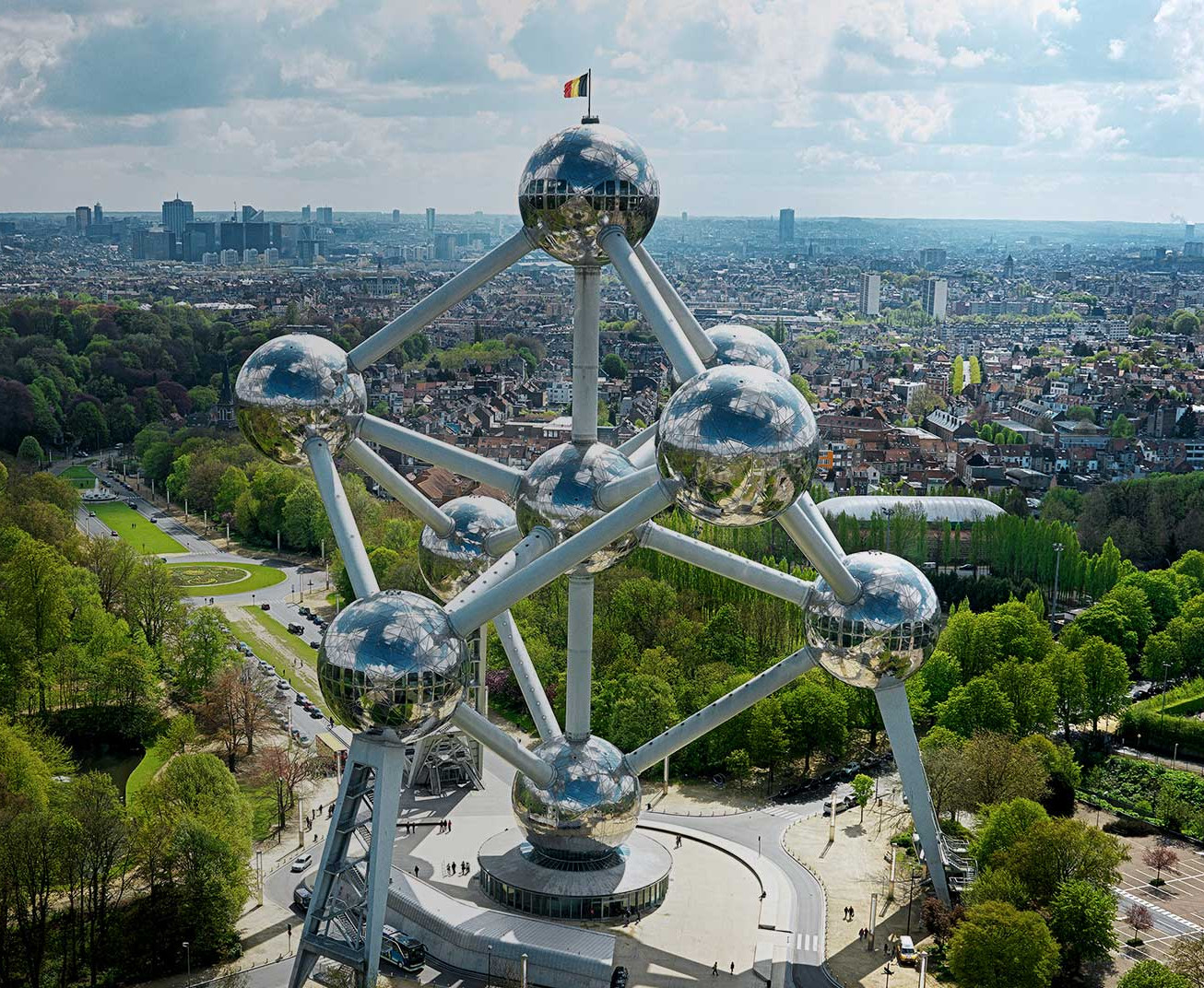
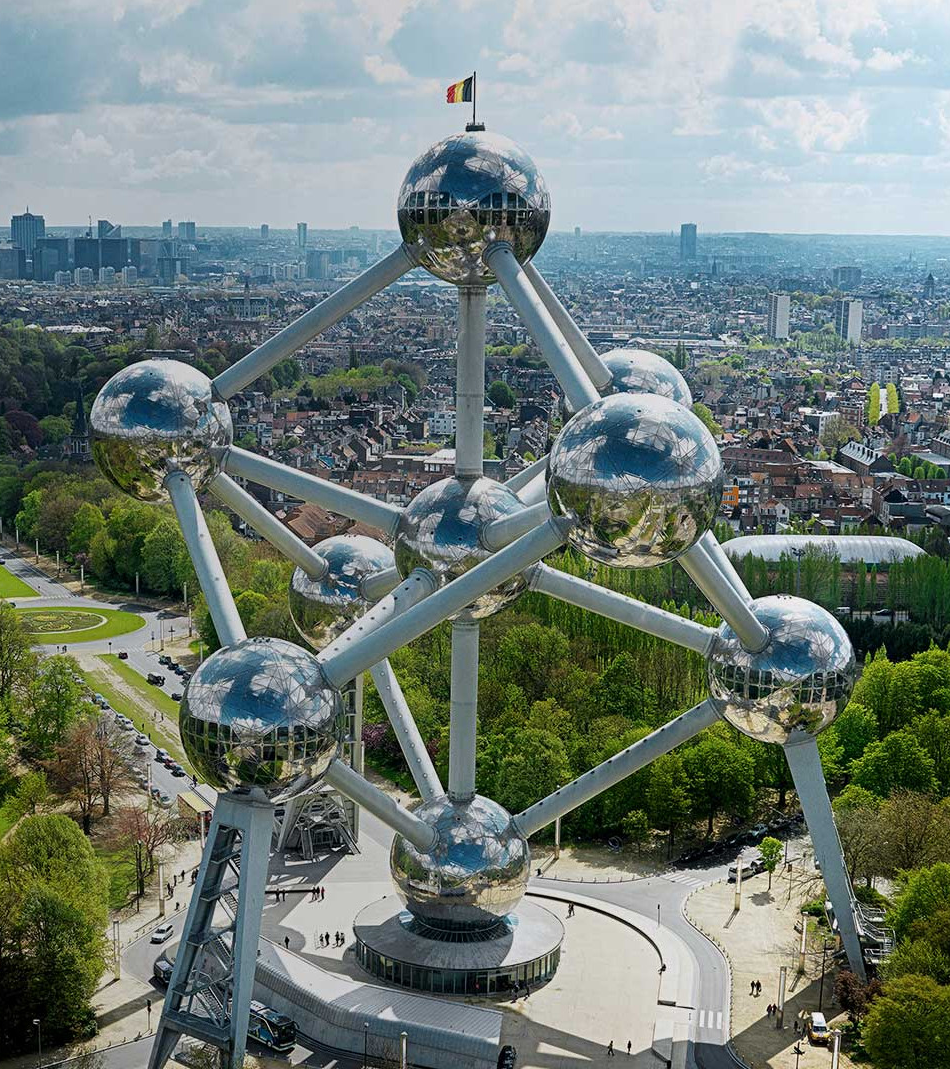
kubisch raumzentrierte Gitter. Diesem Gitter setzt das Atomium in Brüssel ein Denkmal.
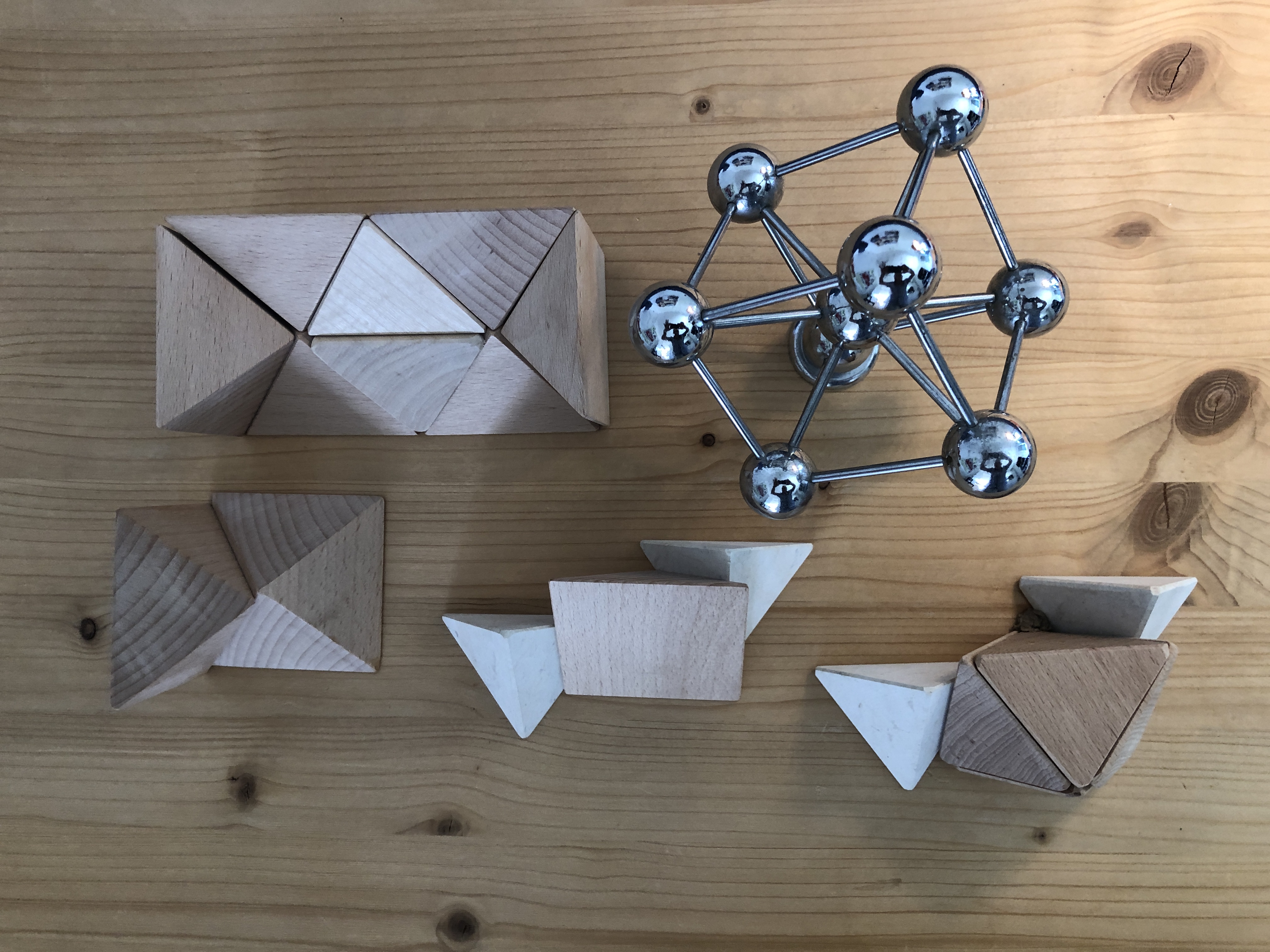
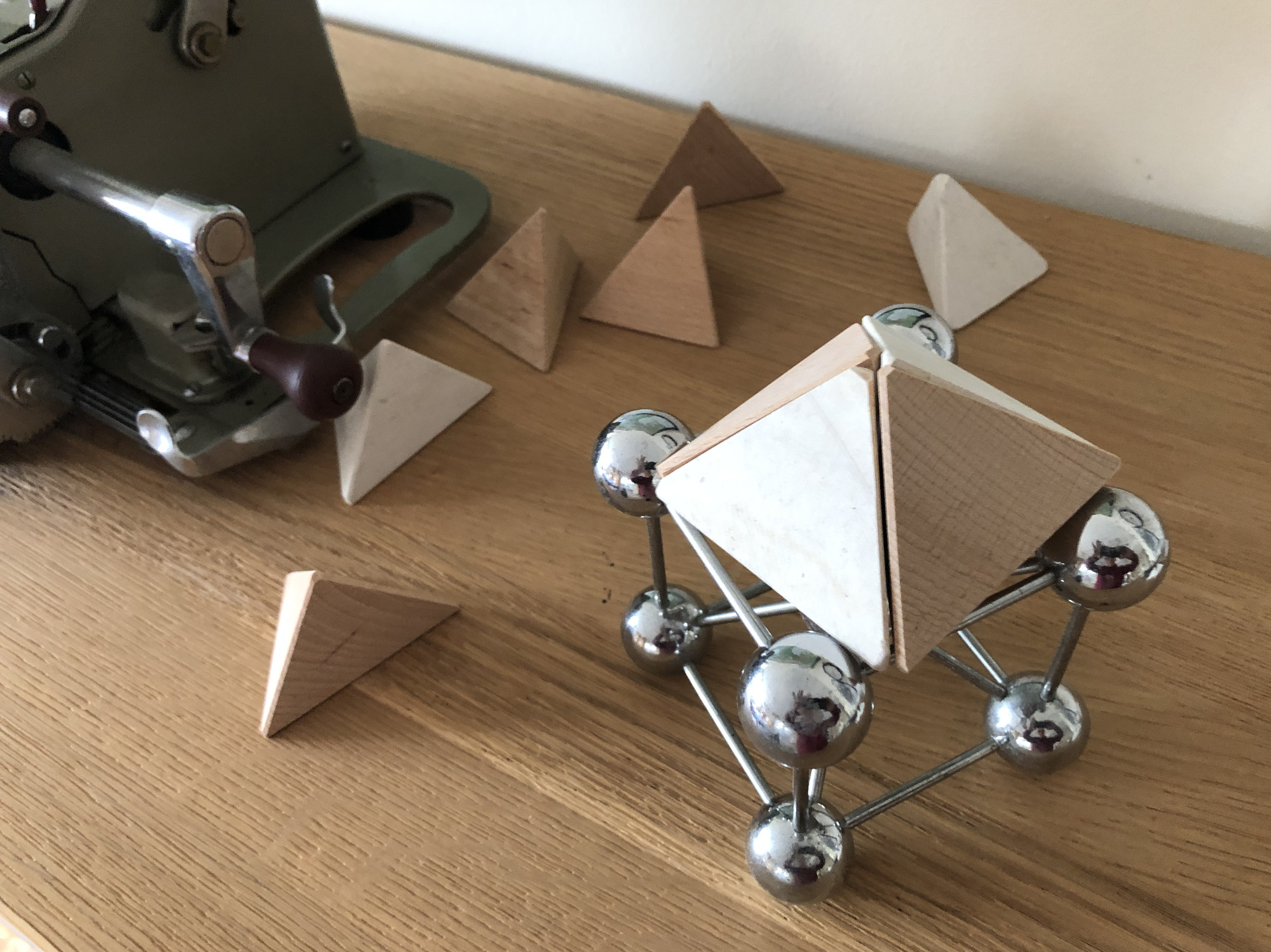
Die Würfel teilen wir in 6 Pyramiden auf. Jeweils 2 benachbarte Pyramiden
mit gemeinsamer 4-Eck-Seite bilden ein Oktaeder. Das sind die Volumen des kubischen raumzentrierten Gitters.
Würfel -> Pyramiden -> Oktaeder -> Tetraeder
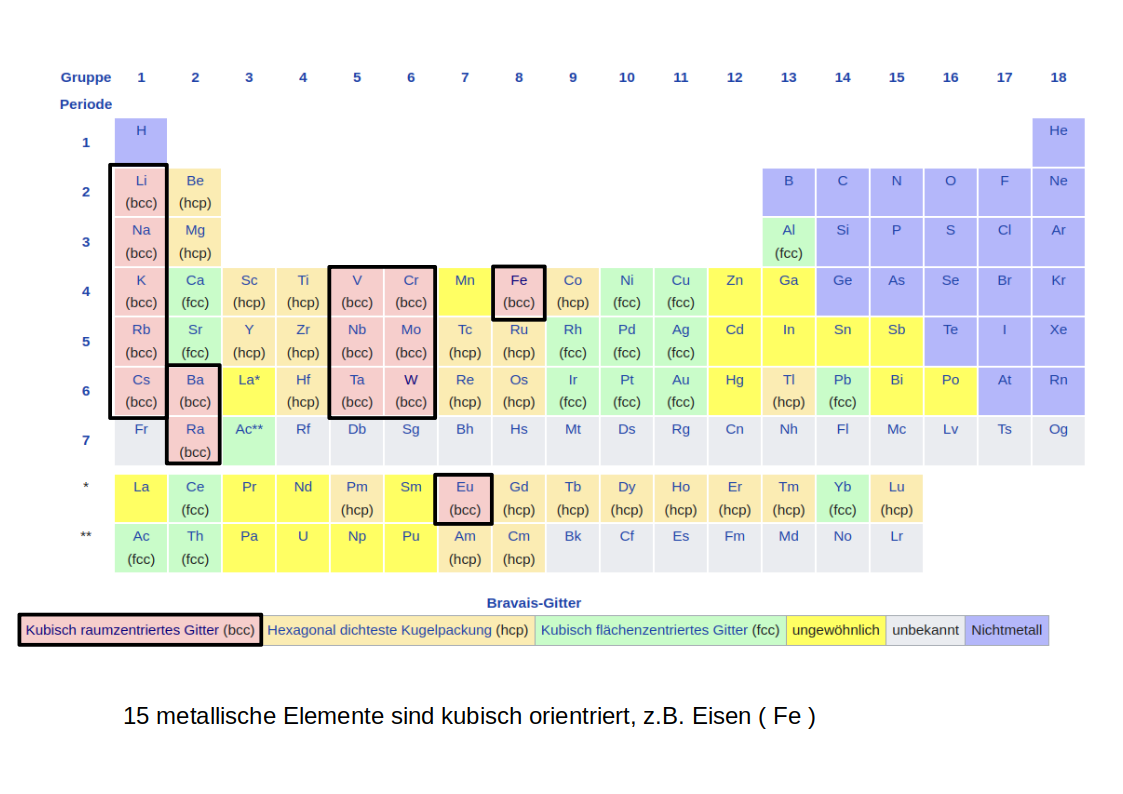
Elektrischer Strom "fließt" in räumlichen Gittern. Die Elektronen springen von Gitterpunkt zu Gitterpunkt. Hier hat sich
die Natur gegen das einfache, kubische 3D-Gitter und fuer dichtere Packungen entschieden. Das "kubisch raumzentrierte Gitter",
englisch "Body Centered Cubic grid" ist eines der drei Metallgitter.
Die Oktaeder haben 3 Diagonalen, zweimal sqrt 2 = 1.414 und einmal 1.0 . An der Kürzeren Diagonalen teilen wir die Oktaeder in
vier Tetraeder. Diese sind etwas ganz besonderes, ich nenne sie kubisch:
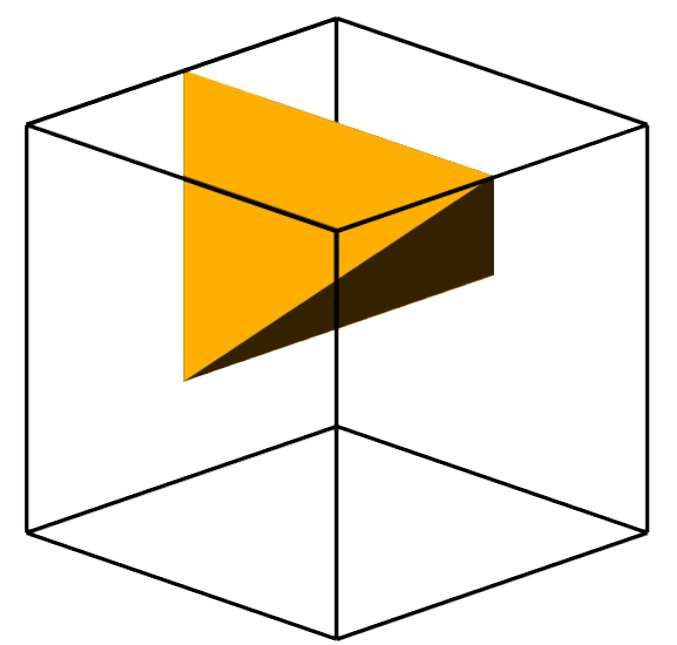
Diese kubischen Tetraeder lassen sich selbstähnlich teilen.
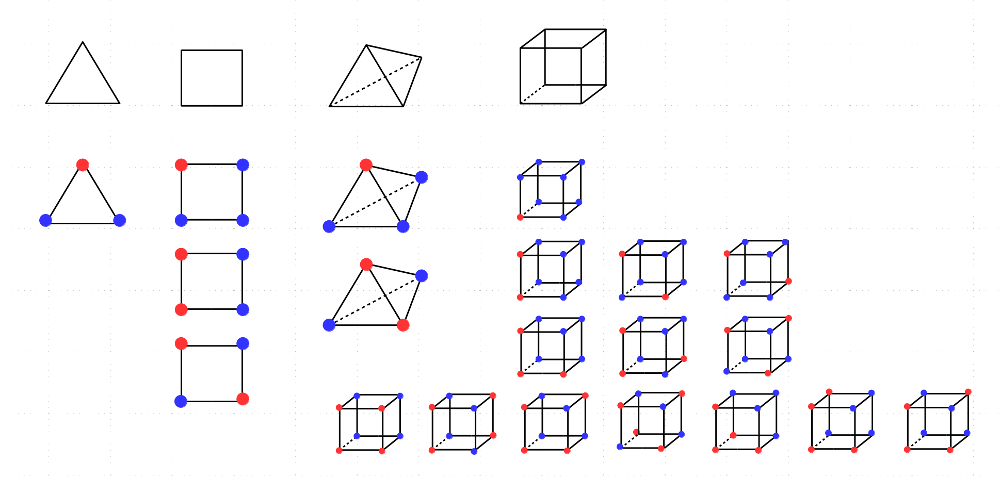
Tetraeder sind einfacher als Würfel. Den Eckpunkten sollen 2 Eigenschaften zugeordnen werden.
Die Aufgabe ist für Tetras einfacher zu lösen, weil es weniger Ecken und weniger Kanten gibt.
############### visit the LFE shop ###############
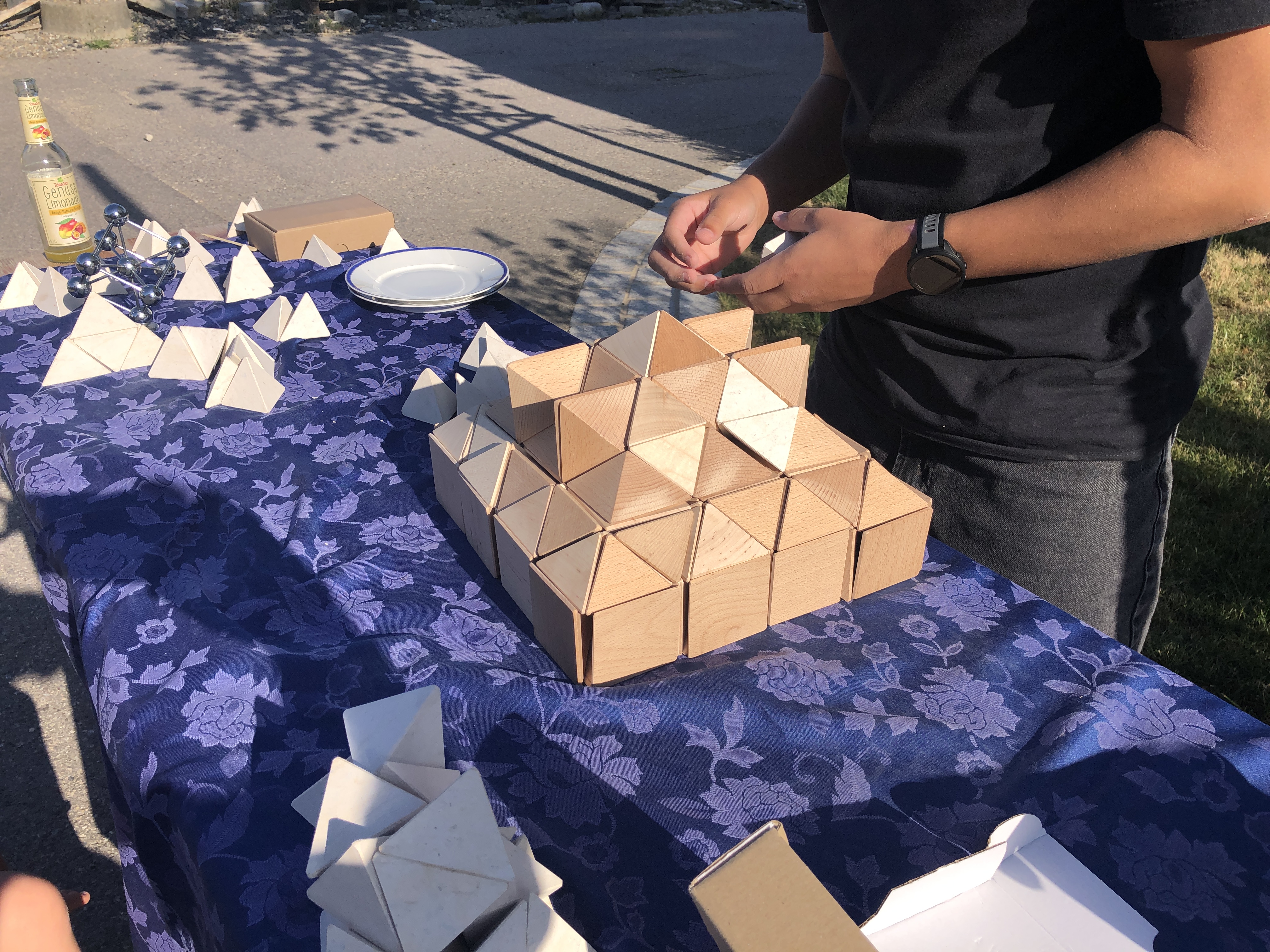
cubic tetra 2 edges 6.9 cm, 2 edges 6.0 cm
pyramid 6,9 cm X 6.9 cm X 3.45 cm
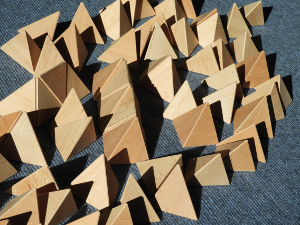
10 cubic Tetras, 10 Pyramids, wood, 100 €
tetra marble 10 €
+ USt + Versand
######################
Welcome to Lautsch Finite Elemente GmbH.
We focus on the development of the Multigrid BCC Method
for automatic meshing of 10 000 parts,
and more.
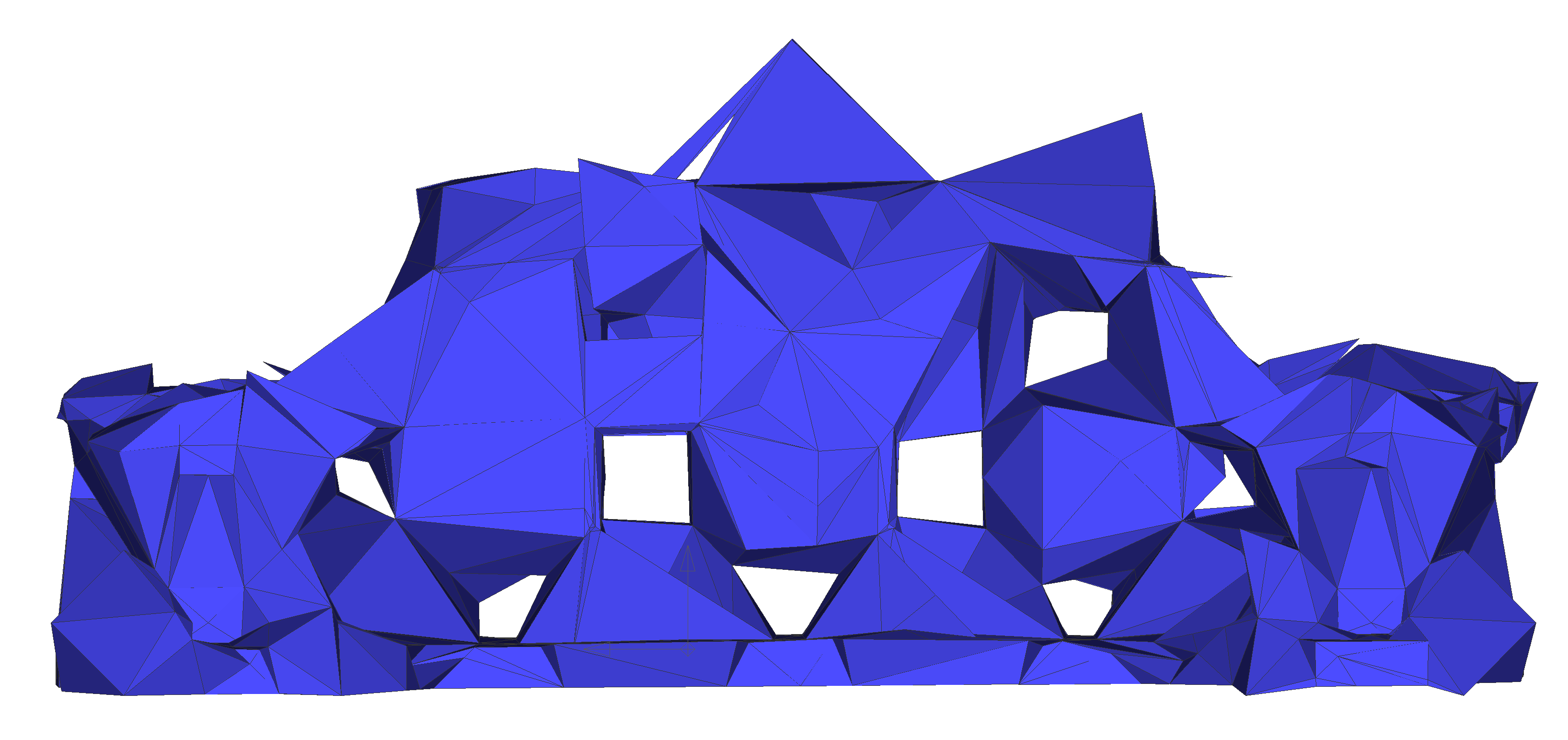
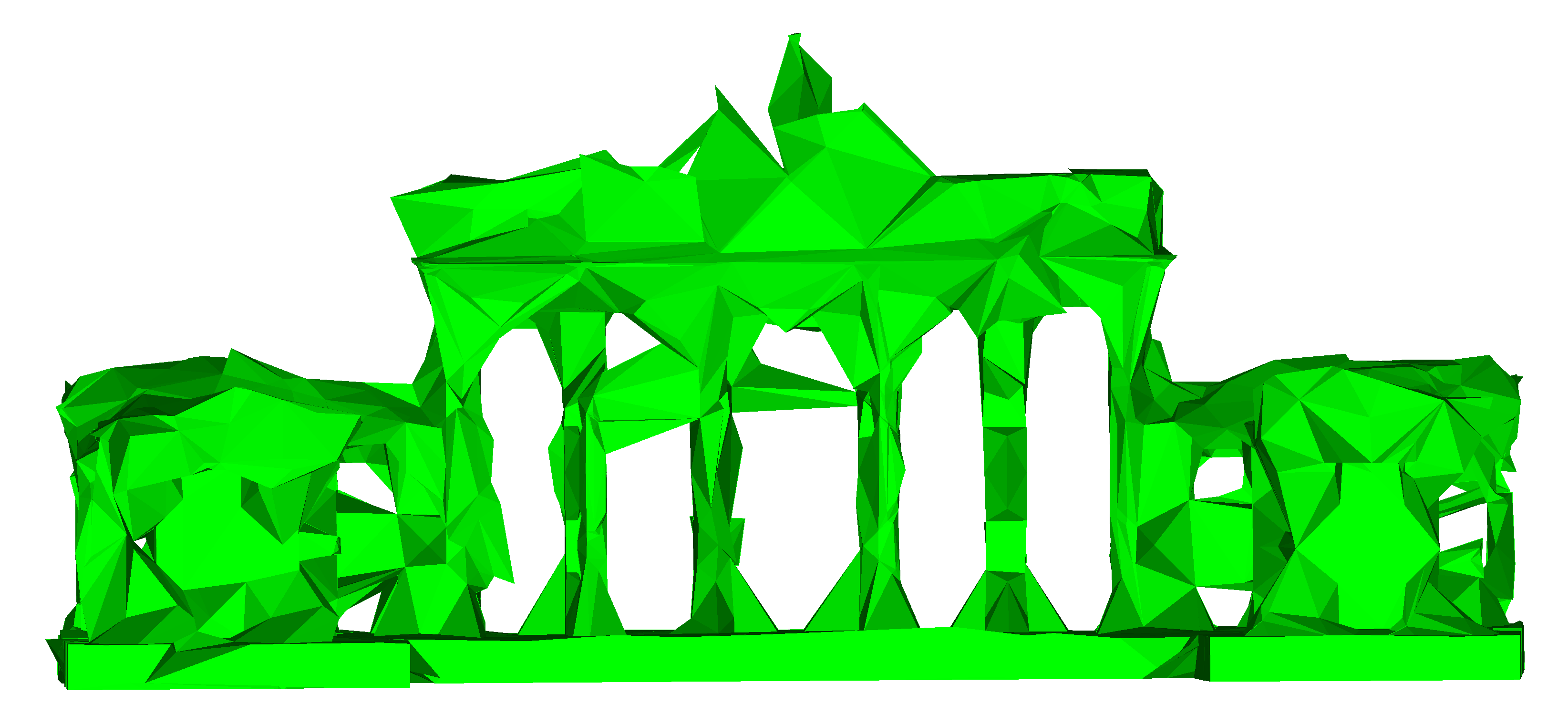
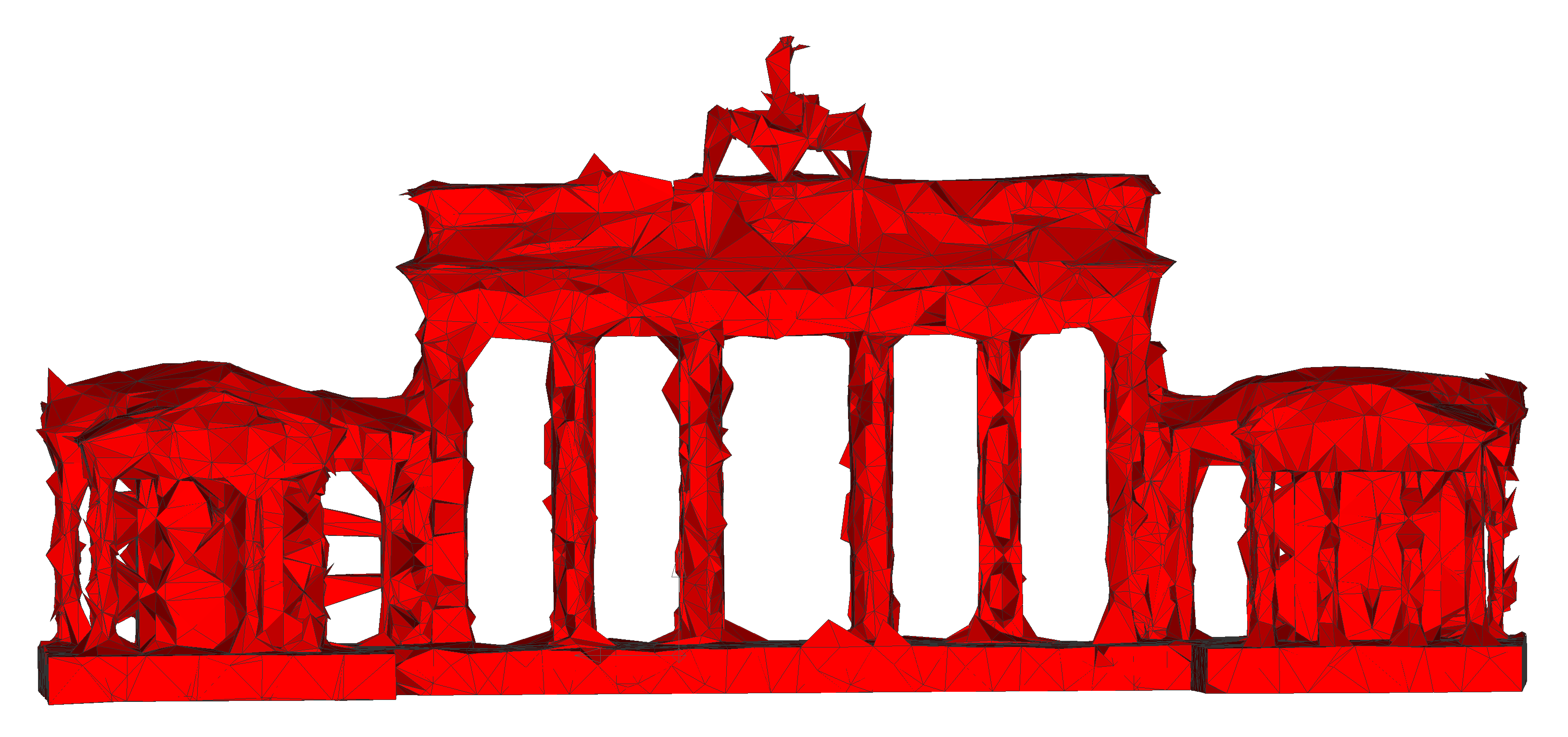
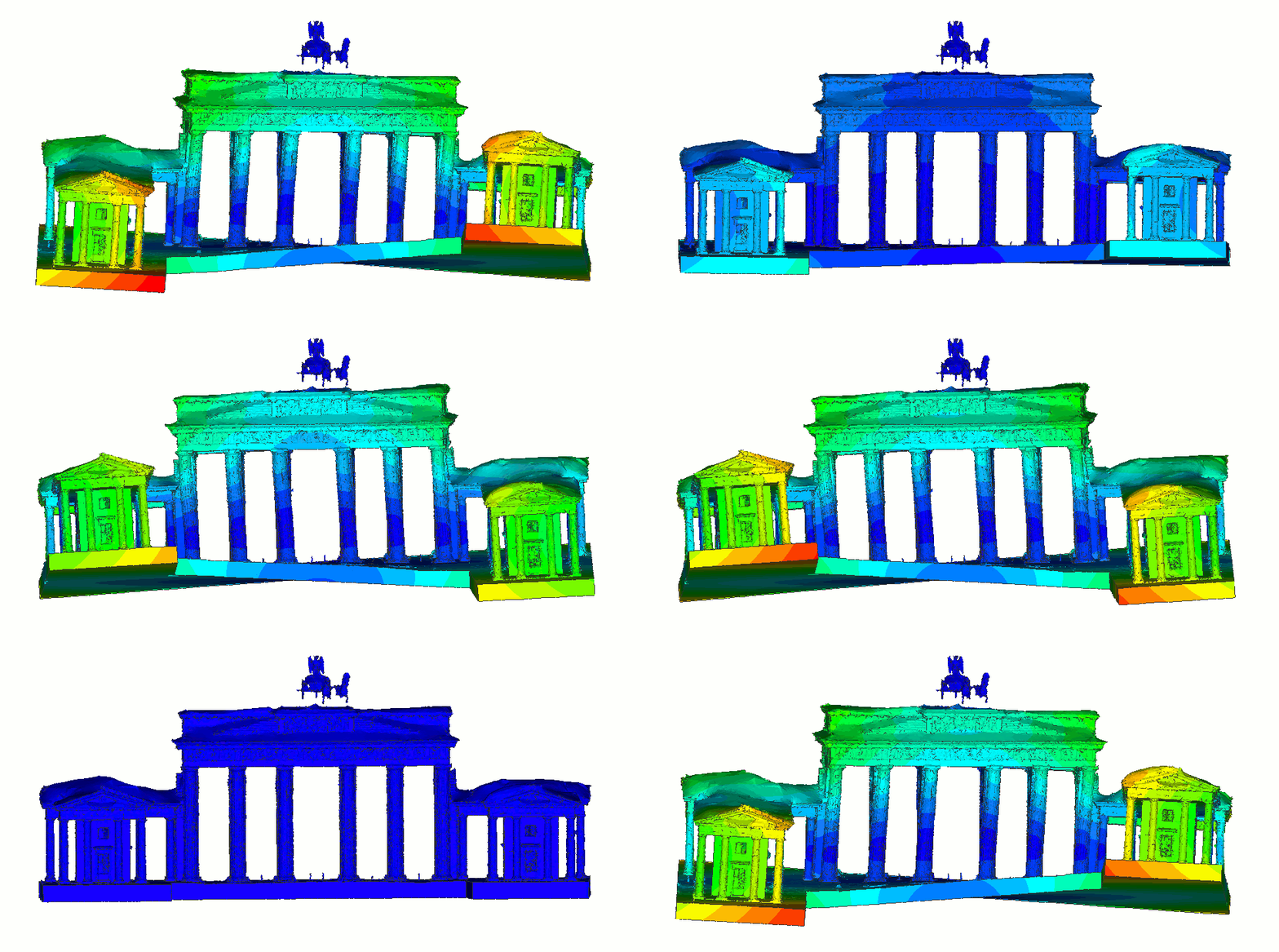
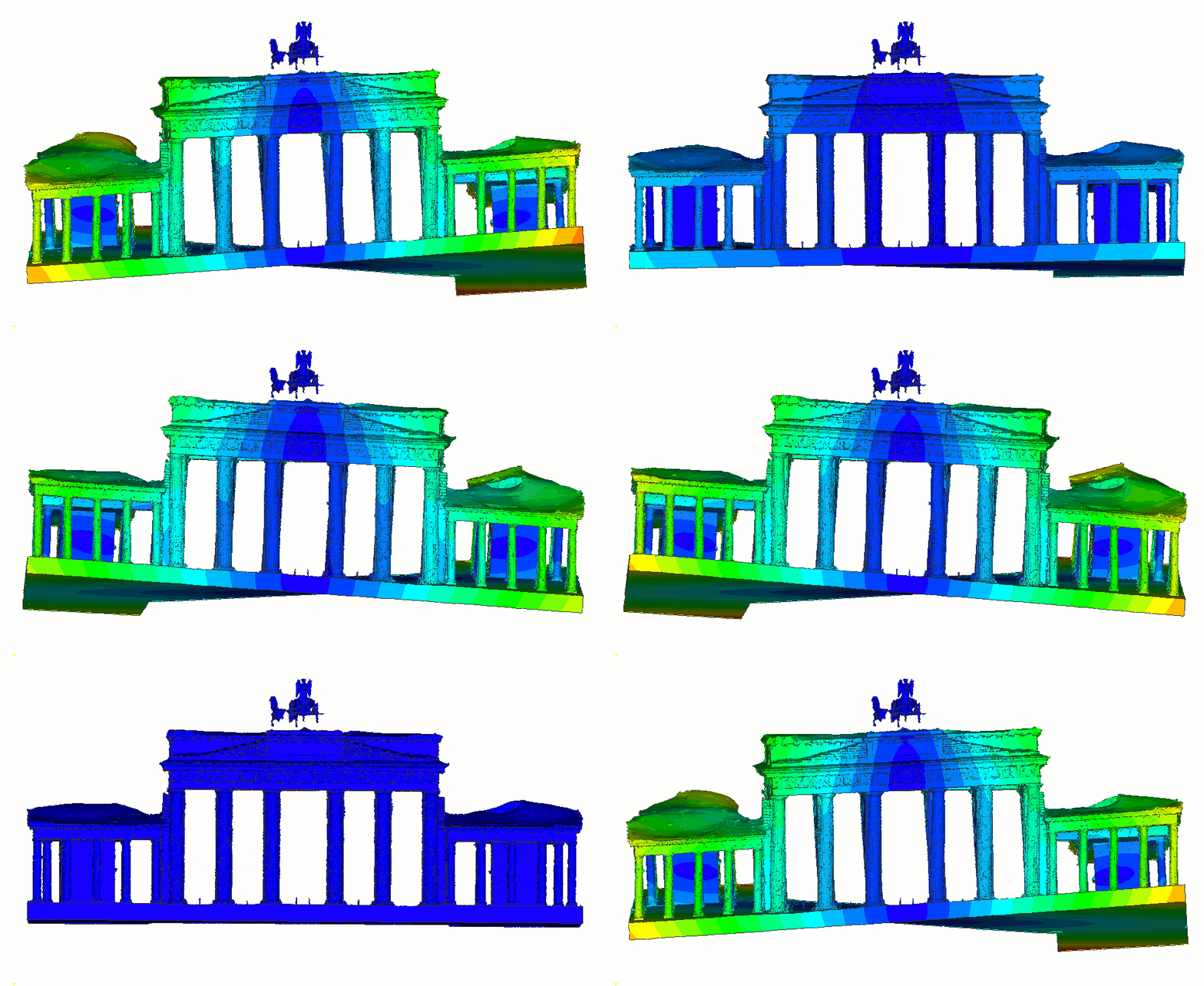
The two sides of the Brandenburg Gate showing a beautiful movement in an Eigenform.
This website collects posters, PDFs and links to support the development of a Finite Element mesh generator: The Multigrid BCC Method.
Multigrid means that a hierarchical sequence of meshes approximates the meshing target. These meshes are part of the BCC grid.
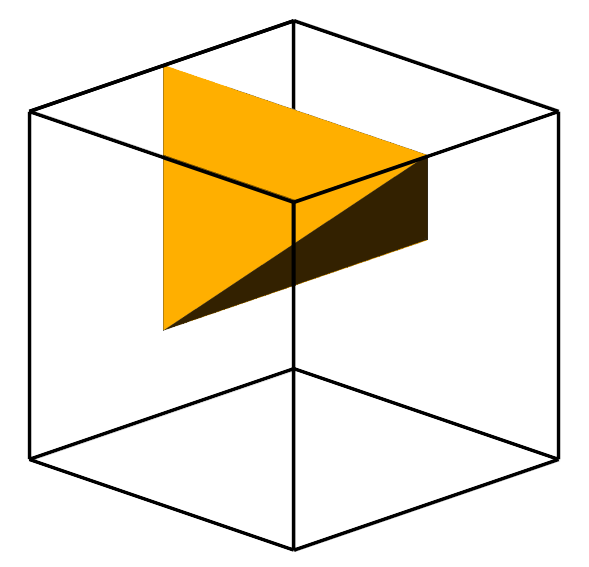 Coordinates of the nodes of the cubic tetra. The cubic tetra can be split to 8 cubic tetras. This allows octree refinement.
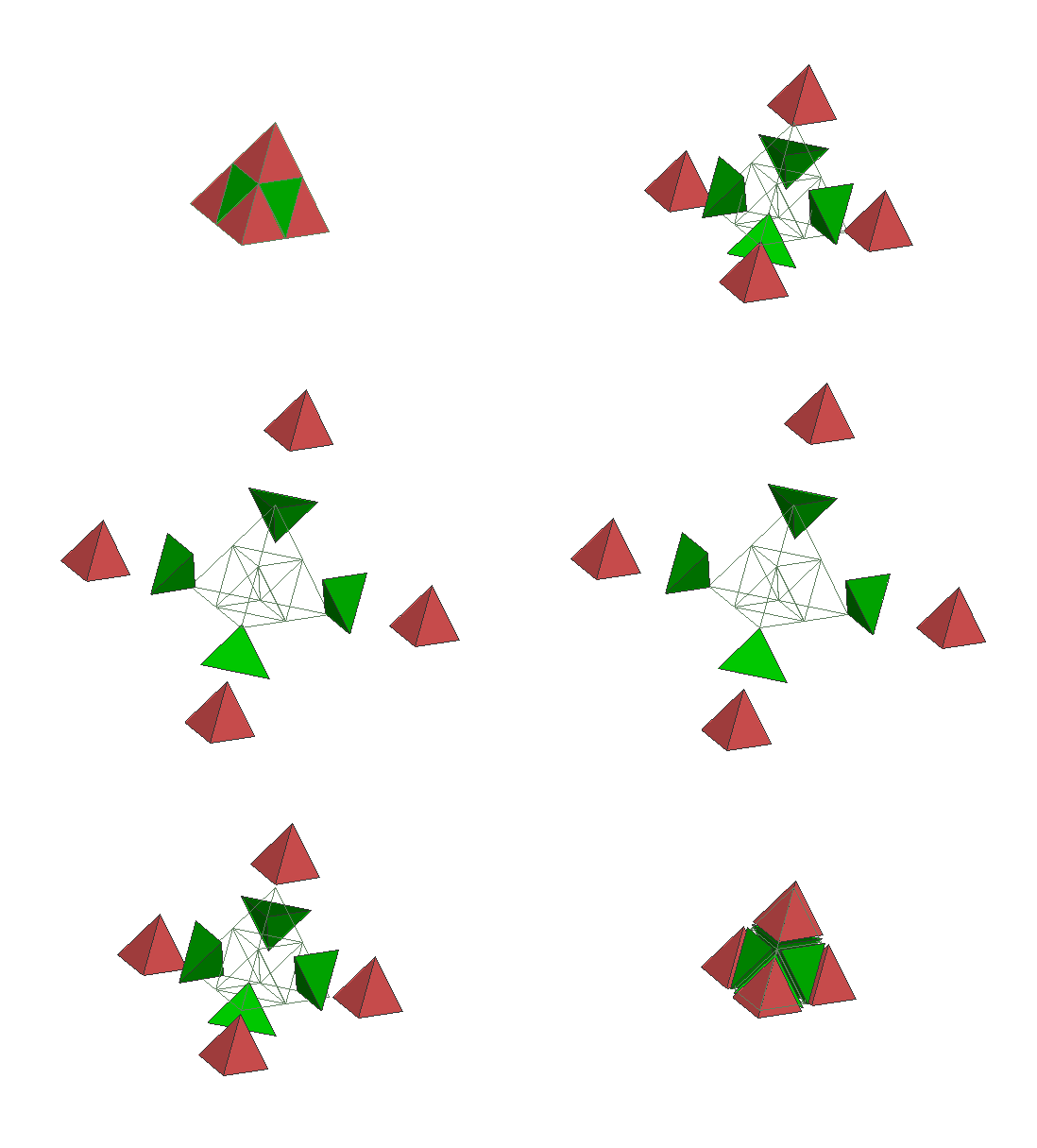
n cubic tetras
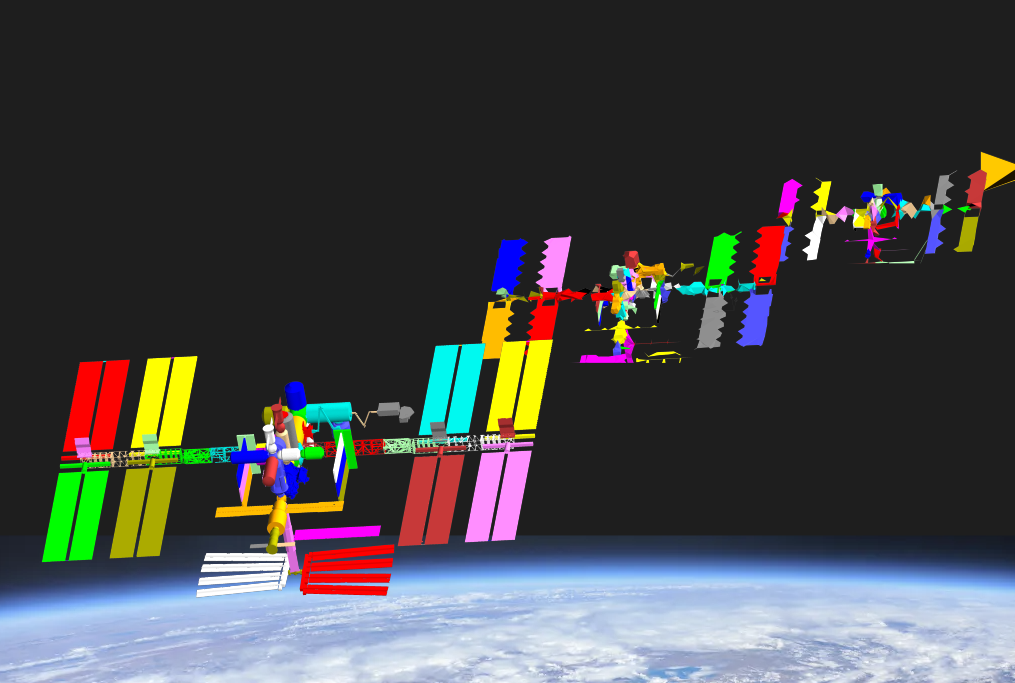
more than 100 parts - different colours
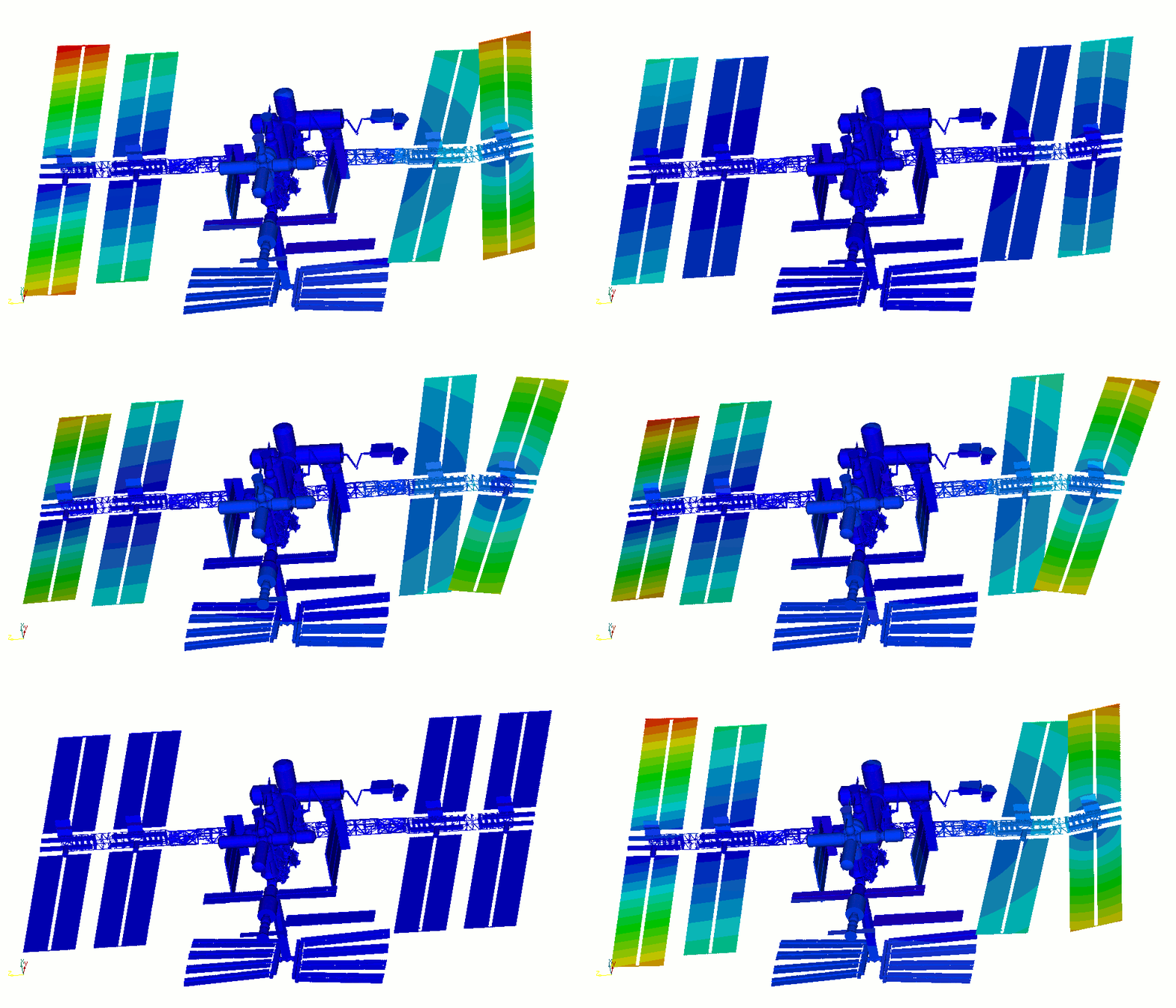
International Space Station - NASA ... homepage
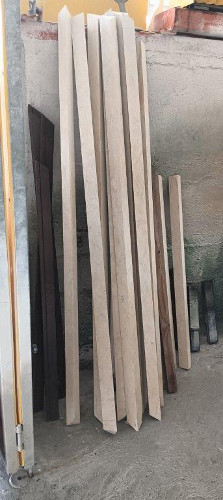
made from prisms
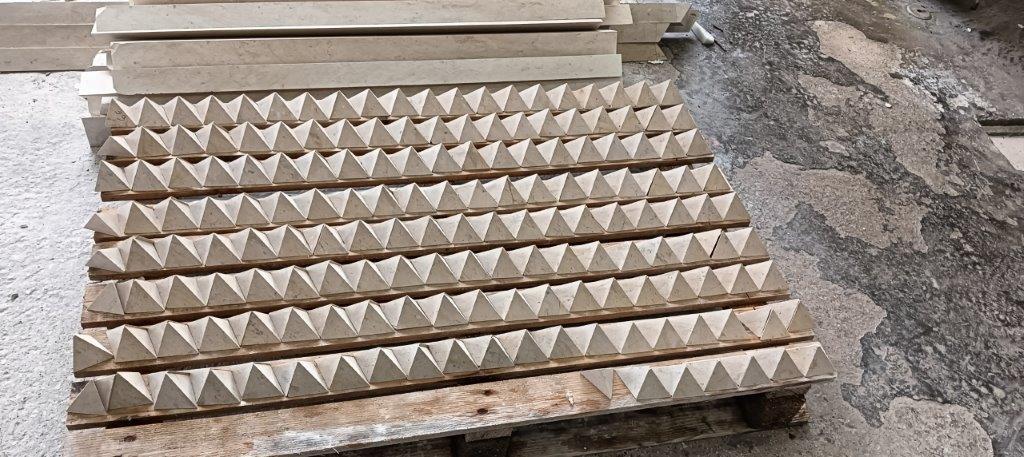
marble tetras
from this it is easy to see that the volume of the cubic Tetra = 1/12
Covering three-dimensional space with tetrahedra is one of the oldest questions
in mathematics. It is said that Aristotle (384 - 322 B.C.) claims that space could be
covered with regular tetrahedra without gaps and it was Regiomontanus
(1436-1476 A.D.) who realized that this was not correct. The proof is
simple: 3, 4, 5 or 6 tetrahedra must come together at each edge
without gaps. But this is not possible.
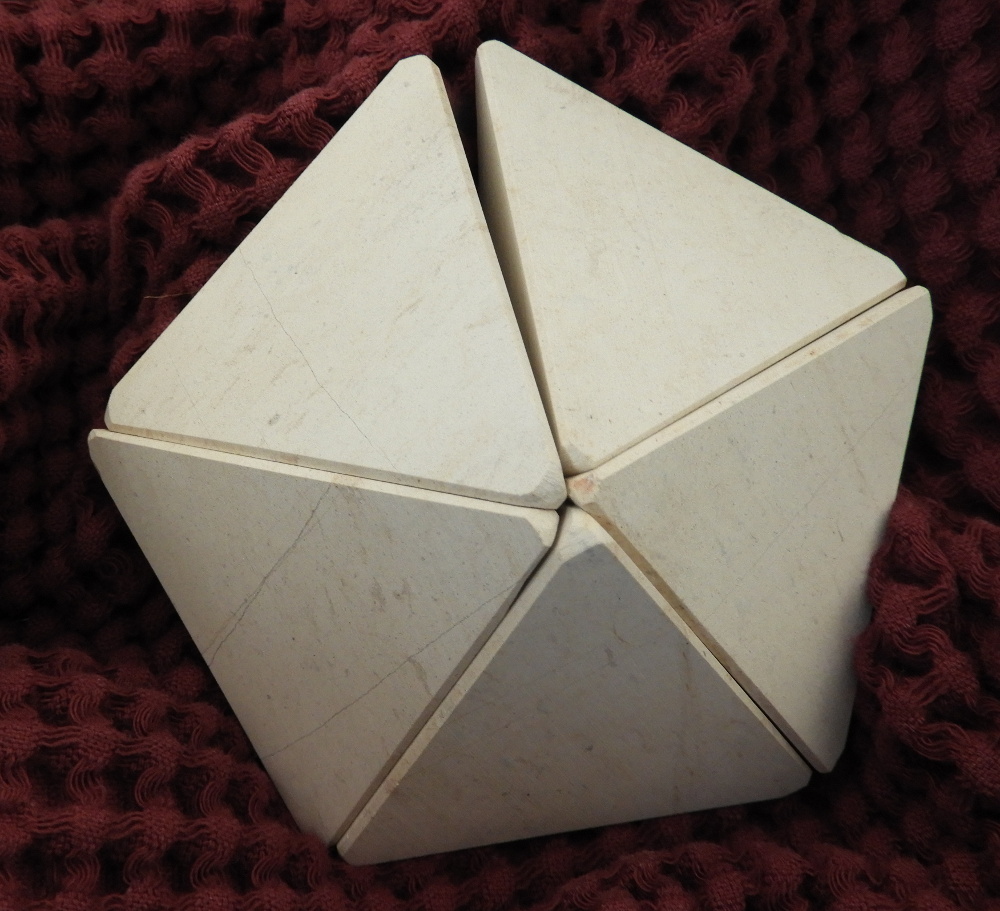
Hill (1896), Sommerville (1923), Baumgartner (1968) and Goldberg (1972)
have specified 5 different tetrahedra which tile 3D space. The most
striking of which is our cubic tetra.
Poster
Poster MULTIGRID MARCHING TETRA
Poster MULTIGRID for linear Systems
Poster Why tetras do not work
PDFs
- Making of the Brandenburg Gate Eigenform
- Making of the braking bicycle
- Some basic maths to understand FE
- International Space Station
contact michael.lautsch[at]lautsch-fe.com
Last update 7 2026